
Brand Identity Strategic Messaging Place-BrandingIconic Waterfront Repositioned

Waterfront Partnership of Baltimore
What Works Studio helped reposition one of America’s most recognizable waterfronts with a clearer identity, a unified story, and a modern brand presence, then activated that story through some of Baltimore’s most iconic civic innovations, including Mr. Trash Wheel, Professor Trash Wheel, and Light City Baltimore.
Baltimore’s waterfront programs had enormous impact, but their story felt scattered. Different initiatives thrived, yet the shared identity connecting them was unclear. When Waterfront Partnership asked What Works Studio to help reimagine the brand, the opportunity was bigger than a logo, it was a chance to redefine how residents and visitors understood the harbor’s future.
What Works Studio approached the project with a simple question. What does the waterfront stand for today, and what should it stand for tomorrow? The answer emerged through the voices of property owners, environmental leaders, city partners, and community members who saw enormous possibility but little cohesion.
Their insights informed a new narrative that placed economic vitality, environmental stewardship, and community belonging at the core of the brand.
From this narrative, a coherent identity took shape. The new visual system honored the movement of water and the energy of a growing city. A redesigned website clarified pathways for partnerships, volunteering, fundraising, and impact. Print materials, maps, reports, and signage gave the waterfront a consistent presence whether someone was walking the promenade, kayaking in the harbor, or attending an event. The work didn’t just refresh the brand. It gave the entire ecosystem a shared vocabulary.

The momentum didn’t stop with identity and messaging. What Works Studio brought to life two of Baltimore’s most beloved environmental icons: Mr. Trash Wheel and Professor Trash Wheel. We created their names, characters, developed their social media personas, and crafted the playful narrative voice that turned harbor cleanup into a global story.
The characters went on to capture global attention. As Bloomberg put it, “Place-branding campaigns might be risky business for cities, but anthropomorphizing a charismatic piece of waste infrastructure? That’s PR gold.” Another Bloomberg line captured the cultural moment even more simply: “Mr. Trash Wheel, as it is known on Twitter, truly captured hearts and minds.”
National Geographic featured the project in a full print spread. Donations surged past five hundred thousand dollars for Professor Trash Wheel, and global media coverage turned the characters into playful ambassadors of environmental innovation. As a PBS NewsHour report noted how fans feel: “Mr. Trash Wheel is a hero.”
That same energy carried into the Light City festival, where art, technology, and public space converged to reintroduce Baltimore to the world.
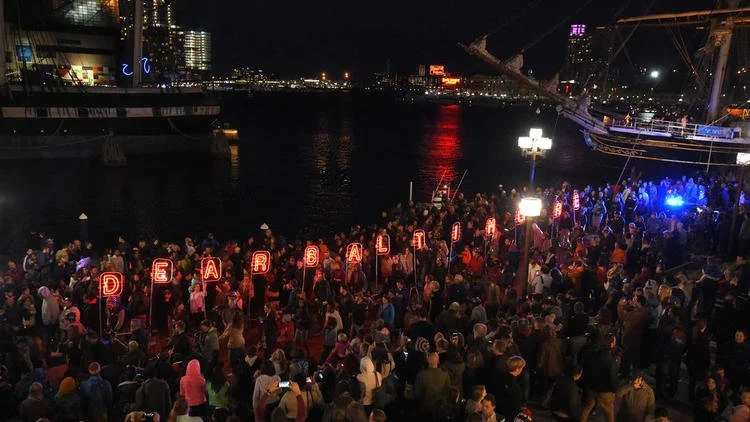
Light City positioned Baltimore as a global destination for creativity and innovation, drawing more than 400,000 attendees to the Inner Harbor in its first year.
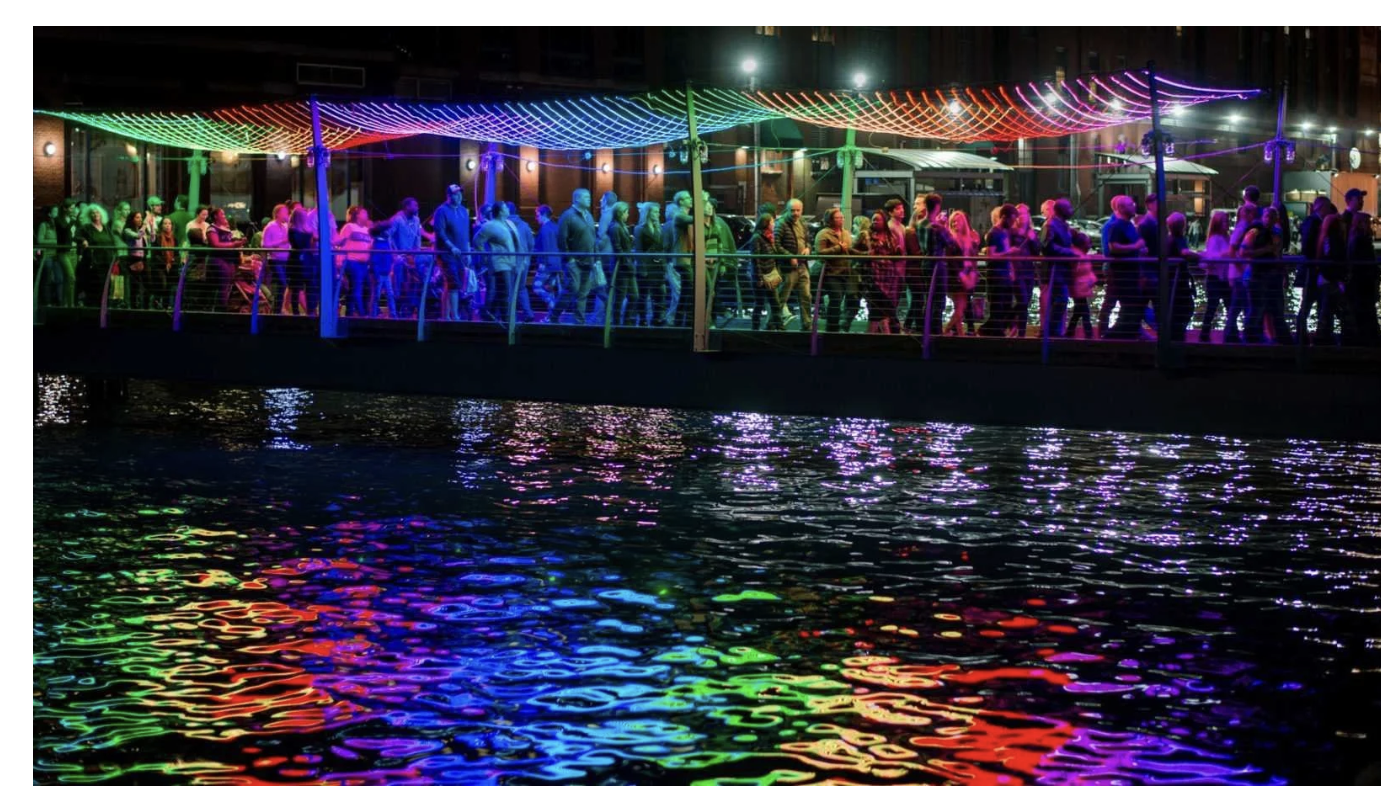
Light City expanded that impact even further. Conceived and launched by Brooke Hall and Justin Allen of What Works Studio and supported early by Waterfront Partnership, the festival reintroduced Baltimore to the world as a place of imagination and renewal. More than one million people attended over three years. The economic impact exceeded $100 million. Media outlets around the globe carried the story. “Light City Baltimore has unlocked forward-thinking ideas and tools to positively impact communities in a way we have never experienced before,” said Mayor Stephanie Rawlings-Blake.
As Adam Lindquist of Waterfront Partnership remarked, “Both Mr. Trash Wheel and Light City are two of the greatest stories to come out of Baltimore in recent years, and neither would have been possible without What Works.”
Together, these initiatives reframed the waterfront not as a static backdrop, but as a living destination driven by creativity, collaboration, and environmental innovation. The brand became stronger. The programs became more connected. And the waterfront reclaimed its place as one of the city’s most powerful engines for optimism and civic pride.
Key Outcomes
Modernized Waterfront Partnership’s brand identity and visual system
Messaging used across programs, campaigns, and public communications
Redesigned website with clear engagement pathways
Branding and design system for Rash Field Park
International recognition for Mr. Trash Wheel and Professor Trash Wheel
National attention and significant economic impact through Light City
1.3 million attendees to the Inner Harbor for Light City over three years